Wimbledon office rubbish disposal solutions for local businesses
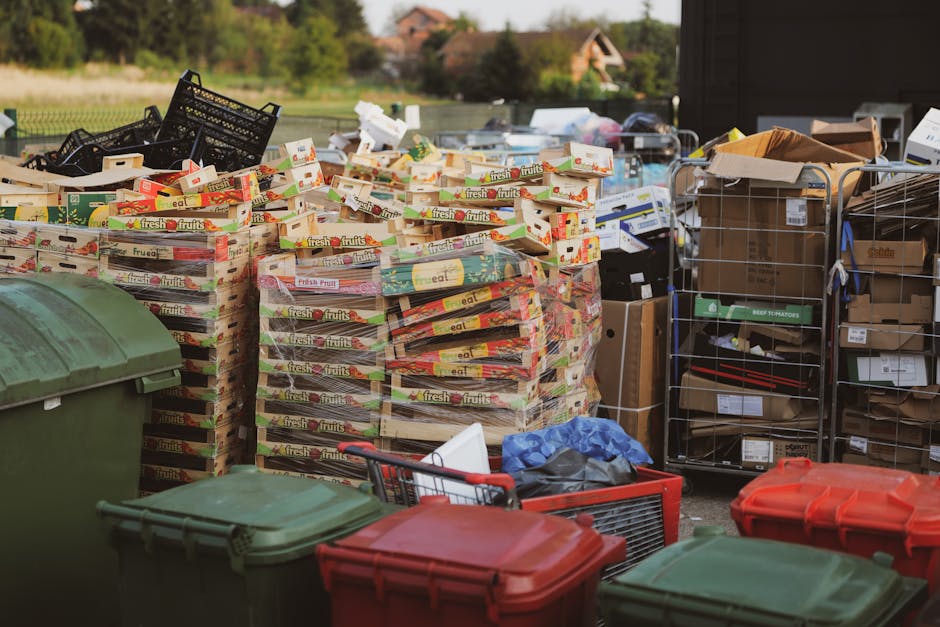
If you run a business in Wimbledon, office rubbish has a habit of building up quietly. One day it is a few broken chairs and a stack of old folders; the next, there are boxes, packaging, redundant IT kit, and a bin area that nobody wants to stand near for long. Wimbledon office rubbish disposal solutions for local businesses are really about making that mess disappear in a way that is quick, compliant, and not disruptive to the working day.
That matters more than people think. A tidy workplace supports staff morale, keeps visitors from seeing a cluttered back room, and helps you avoid awkward storage issues when space is already tight. In this guide, you will find a clear, practical explanation of how office rubbish disposal works locally, what to watch out for, and how to choose a sensible route for your business. No fluff. Just useful, real-world advice.
Whether you are clearing a single office, a shared workspace, or a larger commercial unit, the goal is the same: remove waste safely, handle it responsibly, and keep business moving.
Why Wimbledon office rubbish disposal solutions for local businesses Matters
Office rubbish is not just a housekeeping issue. In a busy area like Wimbledon, where many businesses operate from shared buildings, converted premises, or compact high-street spaces, waste can pile up faster than you expect. One delivery day. One desk move. A small refurbishment. Suddenly there are cardboard, office chairs, monitors, packaging foam, and general junk taking over corners that should be usable.
The real issue is that rubbish has knock-on effects. It can block access routes, create fire safety concerns, and make it harder for cleaners or staff to do their jobs properly. It can also damage a client's impression if they walk past an overflowing store room on the way to a meeting. Let's face it, first impressions count, even when they are formed by a bin area nobody meant them to see.
There is also the business side. If your team wastes time trying to sort disposal, break down furniture, or figure out where an item can go, that is time taken away from actual work. A structured disposal solution gives you a repeatable process, which is especially useful for offices that refresh equipment regularly or operate on tight schedules.
For many local businesses, the best approach is not "just throw it away", but to plan disposal around the type of waste, the access at the property, and the level of disruption you can tolerate. That is where a service-led approach, such as business waste removal or a targeted office clearance, can be far more practical than trying to manage it all in-house.
Expert summary: Good office rubbish disposal is less about the bin itself and more about control: control over timing, sorting, access, safety, and where the waste ends up. If those pieces are handled well, everything else becomes easier.
How Wimbledon office rubbish disposal solutions for local businesses Works
In simple terms, office rubbish disposal usually follows a short chain of steps: assess the waste, separate what can be reused or recycled, remove the items safely, then send them to the right destination. The detail changes depending on whether you have general office waste, bulky items, confidential paperwork, mixed commercial rubbish, or awkward furniture that will not fit through a narrow staircase without a bit of planning.
For local businesses, the process often starts with a site visit or a quick description of what needs clearing. That might include desks, chairs, shelving, old printers, archive boxes, broken monitors, or general junk from a storeroom. From there, the disposal plan is shaped around volume, access, and urgency. If you are on the top floor of a Wimbledon office block with a tight lift schedule, for example, timing matters as much as the waste itself.
Some businesses only need a one-off clearance after a move, renovation, or equipment refresh. Others need recurring waste management support, especially if they produce regular commercial rubbish. There is a meaningful difference between a sudden end-of-lease clear-out and a weekly disposal routine, so it helps to be clear from the beginning.
Where office waste includes furniture or larger items, a proper removal service can save a lot of faff. Items are carried out, loaded, and sorted appropriately rather than left in a corridor waiting for someone with a strong back and not enough time. If the office has a mix of old sofas, reception seating, and desks, services such as furniture clearance and furniture disposal can be especially helpful.
For businesses that are also dealing with leftover materials from a fit-out, light refurbishment, or landlord handover, builders waste clearance may be relevant too. It is not unusual for an office project to produce both standard rubbish and construction-type debris. A good disposal plan should account for both.
Key Benefits and Practical Advantages
There are several reasons local businesses choose a professional rubbish disposal solution rather than relying on internal staff or a patchwork of ad hoc trips to the skip. Some are obvious, others only become clear once you have lived through a chaotic office clear-out.
- Less disruption: the job is handled quickly, often outside normal working hours if needed.
- Better use of space: storage rooms, corridors, and under-desk areas become usable again.
- Safer working environment: fewer trip hazards, blocked exits, and unstable piles of waste.
- More efficient sorting: recyclable materials and reusable items can be separated properly.
- Reduced staff burden: your team stays focused on work instead of moving furniture and lifting heavy items.
- Cleaner client-facing spaces: reception areas and meeting rooms look more professional.
There is also a quiet operational benefit. A business that manages waste well tends to run better in other ways too. You notice clutter more quickly. You plan moves more carefully. You stop letting "temporary" storage become permanent. That small discipline builds up.
And there is a sustainability angle. Responsible disposal often means fewer reusable items going to waste and more materials being handled sensibly. If that matters to your business policy or your customers, it is worth giving thought to how rubbish is sorted. You can also look at a provider's recycling and sustainability approach if you want disposal to align with broader environmental goals.
Who This Is For and When It Makes Sense
These solutions are relevant for a fairly wide range of businesses in Wimbledon, not just large offices. If your business occupies a small suite above a shop, a shared desk space, a consultancy office, or a back-office unit, you will probably need rubbish removal at some point. It is one of those things that nobody plans enthusiastically, but everyone ends up needing.
It makes sense when you are:
- moving out of a leased office and need a fast clear-out
- replacing old desks, chairs, filing cabinets, or reception furniture
- downsizing after a team restructure
- opening a new office and clearing packaging or installation waste
- managing leftover rubbish after a fit-out or refurbishment
- dealing with accumulated junk in a storeroom, basement, or loft space
- trying to reduce clutter before an inspection or client visit
There is a practical middle ground here. Not every business needs a large-scale clearance. Sometimes you just need a few bulky items gone so that everyone can move comfortably again. In other cases, a more general approach to waste removal is enough to keep the space under control.
If your office is part of a mixed-use building, access and timing matter even more. Shared entrances, nearby residents, and loading restrictions can make rubbish removal more sensitive than people expect. A local team that knows the area can be a real advantage there.
Step-by-Step Guidance
If you want the process to run smoothly, it helps to think about office rubbish disposal in stages. Here is a sensible way to tackle it.
- Walk the site. Look through the office, storeroom, kitchen area, and any hidden spots where clutter tends to gather. Be honest about what is there.
- Separate the waste types. Put furniture, general rubbish, electrical items, and anything reusable into different groups if possible.
- Identify what needs special handling. Confidential papers, monitors, and any potentially hazardous material should be dealt with carefully. Do not just shove everything into one pile and hope for the best.
- Check access. Measure doorways, stairwells, lifts, and parking space if needed. Narrow access can change the whole plan.
- Choose a disposal method. Decide whether you need a one-off clearance, regular collection, or a mixed approach.
- Book a convenient time. Early mornings, evenings, or quieter trading periods often work better for offices.
- Clear the area and supervise the handover. Make sure anything being kept is separated before removal begins.
- Ask for confirmation of what was removed. That is especially useful for lease end, internal records, or facilities management.
A small but important detail: label what stays and what goes. It sounds obvious until someone moves the wrong box. And yes, it happens. More often than people admit.
If the office contains bulky or awkward items that need dismantling first, a service with experience in office clearance will usually be better equipped than a general tip run. That can save time and a couple of headaches too.
Expert Tips for Better Results
After enough office clear-outs, a few patterns become clear. The businesses that get the smoothest result usually do three things well: they plan early, they sort properly, and they do not leave the whole job until the last possible afternoon. Which, to be fair, is very tempting.
Tip 1: Start with the bulky items. Desks, chairs, cabinets, and shelving take up more time than loose rubbish. Deal with them first so you can see the real scale of the job.
Tip 2: Be ruthless about dead space. If a cupboard has been "temporary storage" since 2021, it probably needs attention. Old cables, broken stationery drawers, random monitors... all of it eats space.
Tip 3: Keep reusable items separate. Not everything old is worthless. Some furniture can be reused, redeployed, or donated depending on condition. It is worth a quick look before disposal.
Tip 4: Think about the workday. If staff are still onsite, keep the removal path clear and avoid blocking break areas or fire exits.
Tip 5: Ask about sorting and recycling. Responsible disposal is not only about taking things away. It is also about where they go next.
There is also a trust issue here. A provider that explains the process clearly, gives realistic timing, and understands access challenges is usually the safer bet than someone who just says "we can take anything" and leaves it at that.
Common Mistakes to Avoid
Office rubbish disposal can go wrong in surprisingly ordinary ways. None of them are dramatic on their own, but together they create delays and added cost.
- Leaving the job too late: end-of-lease clearances are stressful enough without last-minute sorting.
- Mixing everything together: when general waste, furniture, and electrical items are all piled in one place, disposal becomes slower and messier.
- Ignoring access constraints: if a lift is tiny or parking is limited, the team needs to know before they arrive.
- Forgetting the hidden spaces: cupboards, mezzanines, basements, and store rooms often contain the worst clutter.
- Assuming all waste is the same: it usually is not. Office rubbish, furniture, and renovation waste may need different handling.
- Not checking what should stay: label boxes, files, and equipment clearly so useful items are not removed by mistake.
One small story comes to mind: a Wimbledon office once thought it had "just a few chairs" to remove. The chairs were fine. The problem was the four overflowing archive units behind them and the two printer trolleys nobody had mentioned. The clearance still got done, but the plan had to change on the spot. A five-minute check would have saved twenty.
Truth be told, the biggest mistake is often underestimating how much stuff a working office actually produces.
Tools, Resources and Recommendations
You do not need fancy equipment to manage office rubbish better, but a few simple tools make a noticeable difference. A business can stay far more organised with basic planning than with last-minute scrambling.
- Labelled boxes or bags: useful for sorting papers, cables, office supplies, and recycling.
- Simple inventory list: jot down bulky items, electronics, and anything valuable that should not be removed.
- Measuring tape: helpful for checking lift access, door widths, and stair turns before moving furniture.
- Storage trolleys or dollies: useful for short internal moves, though they are not a replacement for proper lifting.
- Clear floor plan: even a rough sketch helps decide what should be moved first.
In terms of service choices, local Wimbledon businesses often benefit from using a provider that can handle both removal and sorting, especially if the job includes mixed waste. If your office disposal is part of a broader premises clear-out, it may also be worth looking at related services like business waste removal and, where furniture is part of the load, furniture disposal.
Recommended approach? Keep it simple. Make one list, set one date, and agree one point of contact. The less cross-talk, the better.
Law, Compliance, Standards, or Best Practice
Waste handling for businesses in the UK sits within a compliance framework, and while the exact requirements depend on the type of waste and the nature of your business, the basic principle is straightforward: commercial waste should be handled responsibly and not dumped, mixed up carelessly, or left unmanaged.
For offices, this usually means taking extra care with the following:
- Confidential material: paperwork, storage devices, and anything containing sensitive business information should be secure before removal.
- Electrical items: old computers, screens, printers, and cables should be handled properly rather than discarded casually.
- Furniture and bulky items: large items should be removed safely to avoid injury or damage to the building.
- Shared premises: if you are in a multi-tenant building, coordinate with building management so access, lifts, and collection times do not clash.
Best practice also means using a provider who works in a careful, traceable way. That does not have to be complicated. It just means they should remove waste safely, respect the property, and be clear about what happens next. If your business places a strong emphasis on risk control, it can help to review a provider's health and safety policy and insurance and safety approach before booking.
For business owners, the practical rule is this: if a disposal job feels uncertain, slow it down and ask questions. A good provider should be able to explain the process in plain English. No jargon required.
Options, Methods, or Comparison Table
There is more than one way to deal with office rubbish, and the right choice depends on volume, urgency, staff capacity, and the kind of waste involved. Here is a simple comparison.
| Method | Best for | Pros | Trade-offs |
|---|---|---|---|
| Internal staff handling | Very small amounts of light waste | Low direct cost, flexible timing | Uses staff time, lifting risk, can become inefficient fast |
| Regular commercial waste service | Ongoing office waste and routine collections | Predictable, convenient, tidy process | May not suit bulky one-off items |
| One-off office clearance | Moves, refurbishments, or major decluttering | Fast, thorough, ideal for mixed waste | Requires planning and may be more visible on the day |
| Mixed waste and bulky item removal | Desks, chairs, cabinets, packaging, and loose rubbish together | Efficient for complex jobs, less back-and-forth | Needs clear sorting and accurate description upfront |
If your office is mainly dealing with accumulated items rather than daily rubbish, a one-off clearance is usually the cleaner option. If the waste is recurring, a regular service makes more sense. Simple enough, really.
For premises that also have old stock, surplus household-style items, or mixed storage clutter in adjoining rooms, services like home clearance or house clearance may be relevant in broader property management contexts, though office-focused waste should still be treated as a separate job. Different waste, different plan.
Case Study or Real-World Example
Imagine a small Wimbledon-based accountancy practice preparing for an office refresh. The team has a reception area that still contains two old armchairs, a back room packed with archive boxes, and a meeting room full of mismatched desks that no longer fit the way the business works. Nothing is hazardous. Nothing is dramatic. But the clutter is starting to affect the place.
The practice manager starts by listing what stays and what goes. The archive boxes are sorted, the monitors are separated, and the bulky furniture is measured. They schedule removal for a quiet morning when there are fewer client appointments. The team clears access the evening before, labels the keep items, and walks the route from the office to the exit. Small job, but done properly.
On the day, the removal is quick because the planning was done in advance. The reception area looks cleaner, staff can move more easily, and the practice no longer has to work around a pile of "temporary" storage. A pretty ordinary scenario, honestly, but that is often how office rubbish disposal works in real life. Quietly fixing a practical problem before it becomes a bigger one.
If the office had included extra items from a storage space or unused upper level, a specialist clear-out for areas such as a loft clearance or garage clearance might have helped as part of a wider property tidy-up. Not always needed, but useful when businesses store overflow in unusual places.
Practical Checklist
Use this checklist before you book or begin an office rubbish disposal job:
- Identify all rubbish types: general waste, furniture, electronics, paper, packaging, and anything unusual.
- Separate what is being kept from what is going.
- Check access points, lift size, stairs, and parking arrangements.
- Decide whether the job is a one-off clearance or ongoing waste removal.
- Make sure confidential material is secured before collection.
- Confirm any fragile, heavy, or awkward items that need special handling.
- Choose a time that minimises disruption to staff and visitors.
- Ask about recycling and responsible disposal.
- Review health and safety considerations for the building.
- Keep a simple record of what was removed, especially at lease end.
If you work through that list properly, the job tends to go far more smoothly. It is a bit boring, admittedly, but boring is good when the aim is getting rid of rubbish without drama.
Get a free quote today and see how much you can save.
Conclusion
Wimbledon office rubbish disposal solutions for local businesses are really about practicality, not ceremony. When waste is handled well, the office feels calmer, staff can move freely, and the business presents itself more professionally. When it is handled badly, even a small pile of clutter starts to become everyone's problem.
The best approach is usually the simplest one: understand the type of waste, plan the access, separate what matters, and choose a disposal method that suits the pace of your business. If you do that, you will avoid most of the usual headaches and keep the space working for you rather than against you.
And honestly, that is what good office management looks like in the real world. Small improvements, done properly, make a bigger difference than people expect.
Frequently Asked Questions
What counts as office rubbish for a Wimbledon business?
Office rubbish can include general waste, old paperwork, cardboard, packaging, broken furniture, outdated electronics, and surplus items from storage areas. In practice, it is often a mixed load rather than one neat category.
Is office rubbish disposal the same as regular business waste removal?
Not always. Regular business waste removal is usually ongoing and routine, while office rubbish disposal often includes bulkier items, one-off clearances, or a mix of waste types after a move, refresh, or refurbishment.
How do I know if I need a full office clearance?
If multiple rooms, storage areas, or bulky items need clearing at once, a full office clearance is usually more efficient. If you only have a small volume of rubbish, a simpler removal arrangement may be enough.
Can old office furniture be removed with general rubbish?
It depends on the setup, but bulky furniture is often easier to handle as part of a dedicated furniture removal or office clearance job. That avoids awkward lifting and keeps the process more organised.
What should I do with confidential paperwork before disposal?
Keep it separate, secure it properly, and make sure it is not mixed in with general rubbish. Sensitive paperwork should never be left loose in a shared waste pile.
How long does an office rubbish clearance usually take?
It varies based on volume, access, and item type. A small job may be quite quick, while a larger clear-out or a cramped building can take longer. Good preparation makes a noticeable difference.
Can office rubbish disposal be done outside working hours?
Yes, that is often the easiest option for busy offices. Early morning, evening, or quieter periods can reduce disruption, especially where staff, clients, or building access need to be managed carefully.
What happens to recyclable office waste?
Recyclable materials should be separated where possible and sent for appropriate processing. That may include cardboard, some plastics, paper, and certain reusable or recyclable office items depending on condition and sorting.
Do I need to sort everything before the team arrives?
It helps, but you do not need to make it perfect. A basic separation of keep items, rubbish, furniture, and confidential material is usually enough to make the job run smoothly.
Is office rubbish disposal suitable for small businesses too?
Absolutely. Small businesses often benefit the most because they usually have limited storage space and fewer people available to handle lifting, sorting, and transport.
What is the biggest mistake businesses make with office rubbish?
The most common mistake is leaving it too late and underestimating the volume. Once rubbish starts affecting access or workflow, it becomes more than a tidy-up job.
How do I choose a good local disposal service in Wimbledon?
Look for clear communication, sensible timing, transparent expectations, and a service that understands office access, bulky items, and responsible disposal. A good provider should make the process feel straightforward, not stressful.